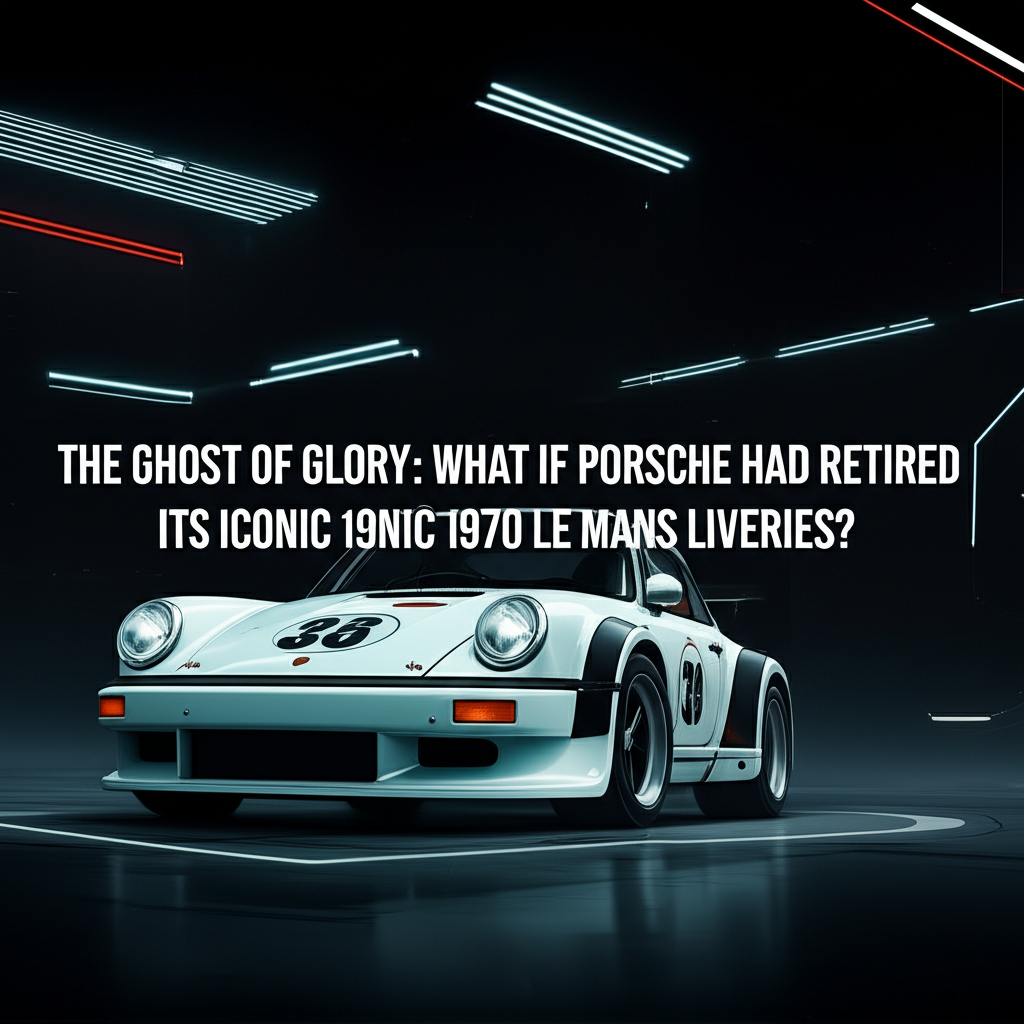
Imagine a world where Porsche's legendary 1970 Le Mans winning liveries vanished after their historic victory. We explore the profound impact such a decision would have had on motorsport history, brand identity, and fan legacy.
Exploring a hypothetical motorsport decision with lasting consequences.

The 1970 24 Hours of Le Mans stands as a monumental chapter in motorsport history. After years of chasing the elusive overall victory, Porsche finally achieved its dream, securing a commanding 1-2 finish with its legendary 917 race cars. The #23 Porsche 917K (short-tail) in its iconic red and white Salzburg livery, driven by Hans Herrmann and Richard Attwood, crossed the finish line first. Following close behind was the #3 Porsche 917L (long-tail) adorned in the striking psychedelic 'Martini Racing' livery, piloted by Gerard Larrousse and Willy Kauhsen.
These cars were not just engineering marvels; their liveries instantly became symbols of speed, innovation, and triumph. They represented the culmination of Porsche's relentless pursuit of victory at the world's most gruelling endurance race. These iconic liveries etched themselves into the collective memory of racing enthusiasts worldwide.
Now, let's play a game of 'what if'. Imagine that after the checkered flag waved on that historic day in 1970, Porsche, in a bold and unprecedented move, decided to 'retire' these winning liveries. This would mean that the red and white Salzburg design and the psychedelic Martini pattern would never again grace a factory Porsche race car. They would be exclusive to the 1970 winning cars, becoming museum pieces, preserved as snapshots of a single, glorious moment.
What would be the immediate effect? The two winning Porsche 917s would undoubtedly become even more legendary, perhaps imbued with an almost sacred status due to their unique, unrepeatable visual identity. They would be singular masterpieces, never to be replicated on the track. This exclusivity might elevate their value and mystique to unprecedented levels.

However, the long-term ramifications would be far more profound, and arguably, detrimental. Race car liveries are more than just paint schemes; they are integral to a brand's identity, a visual language that communicates heritage, values, and competitive spirit. The Martini Racing livery, in particular, transcended its initial application to become synonymous with Porsche's racing pedigree across decades and different motorsport disciplines.

Thankfully, Porsche never made such a decision. Instead, the winning liveries became an integral part of their ongoing legacy. The Martini Racing stripes, in particular, continued to adorn various Porsche race cars for decades, from prototypes to rally cars, evolving slightly but always retaining their distinct identity. This continued presence has allowed generations of fans to connect with that original 1970 victory, seeing its spirit carried forward.
It highlights a crucial aspect of motorsport heritage: some symbols are too powerful, too resonant, to be confined to a single moment. They are living legends, constantly reinterpreted and celebrated, ensuring that the stories of past triumphs continue to inspire future generations.
Do you agree that retiring such iconic liveries would have been a mistake? Which other race car liveries do you think are timeless? Share your perspective in the comments!

Mehebub Alam
Author
Share this post:
Stay up-to-date with the latest insights and news in technology and business.
By subscribing, you agree to our Terms and Privacy Policy.
Explore more articles from our blog.

Microsoft has announced that Halo Infinite will transition into maintenance mode later this month, a strategic move by 343 Industries to shift its focus towards the development of multiple new Halo games. This decision marks a significant turning point for the iconic sci-fi shooter series.

Best Buy's highly anticipated Black Friday Doorbuster sales continue with the release of 'Week 2' deals. Shoppers can now dive into a fresh wave of discounts across popular electronics, offering a prime opportunity to snag holiday gifts early and beat the rush.

Apple is reportedly gearing up to release a new, lower-cost MacBook in 2026, aiming to make its premium laptop experience more accessible and compete directly with the burgeoning market for budget-friendly notebooks, including Chromebooks. This strategic move could redefine Apple's presence in the education and mainstream computing sectors.
